Anodizing or powder coating? Choosing a finish for aluminium parts
Both finishes protect aluminium, but they behave differently in colour, wear, masking and cost. A practical comparison for product teams.
- Finishing
- Anodizing
- Powder coating
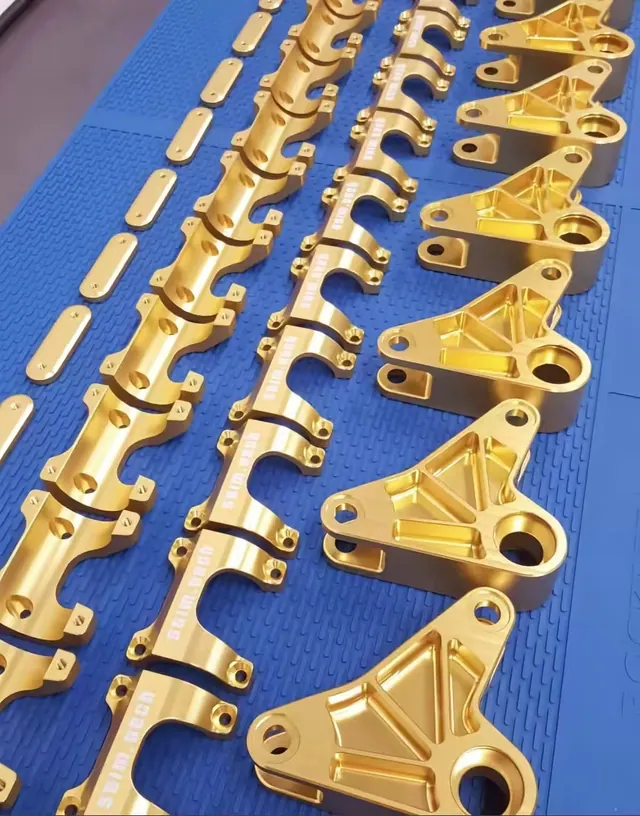
Both finishes protect aluminium, and both are commonly specified on the same drawing set. The difference is what each one does to the surface and how much control you have over the result.
Anodizing grows into the metal
Anodizing converts the aluminium surface into an oxide layer. It does not chip or peel because it is not a layer sitting on top of the metal, and it keeps the metallic look that makes aluminium attractive in the first place.
- Appearance: clear, black or dyed colour over a bead blasted, brushed or polished base.
- Wear: Type II gives moderate wear resistance; Type III hard anodizing is genuinely hard.
- Dimensions: the coating grows into and out of the surface, so tolerances on threads and bores need to allow for it.
- Colour limits: the alloy affects dye uptake. 7075 goes bronze or purple in black dye, while 6061 takes black cleanly.
- Electrical: anodizing is an insulator — grounding surfaces must be masked.
Powder coating sits on the metal
Powder coating is a polymer layer, electrostatically applied and cured. It is thick, tough and available in essentially any colour.
- Appearance: RAL, Pantone or matched colours, in matte, satin, gloss or textured finishes.
- Wear: resists chipping and impact better than most liquid paints.
- Dimensions: 60–120 µm of film build, which matters on threads, bores and press fits.
- Colour: consistent and easy to repeat, including for outdoor exposure with the right primer.
- Electrical: insulating, like anodizing.
How to decide
Choose anodizing when the part should still look like metal, when wear resistance matters, when the geometry is complex and thin film is an advantage, or when you need masking for conductivity.
Choose powder coating when the colour is specific and must be repeatable, when the part needs maximum chipping and corrosion resistance, or when the surface is large and the part is a steel or aluminium fabrication.
A common pattern in product design is anodizing for visible aluminium structure and powder coating for the steel frame it mounts to. Both are available from the same order, which avoids a colour conversation across two suppliers.
The one rule that matters
Approve a physical sample before the production batch, in the finish, colour and surface texture you intend to use. Screens, photographs and memory are all unreliable colour references — the sample on the desk is not.
Questions about this topic? Our engineers answer RFQs directly.
Get a Quote