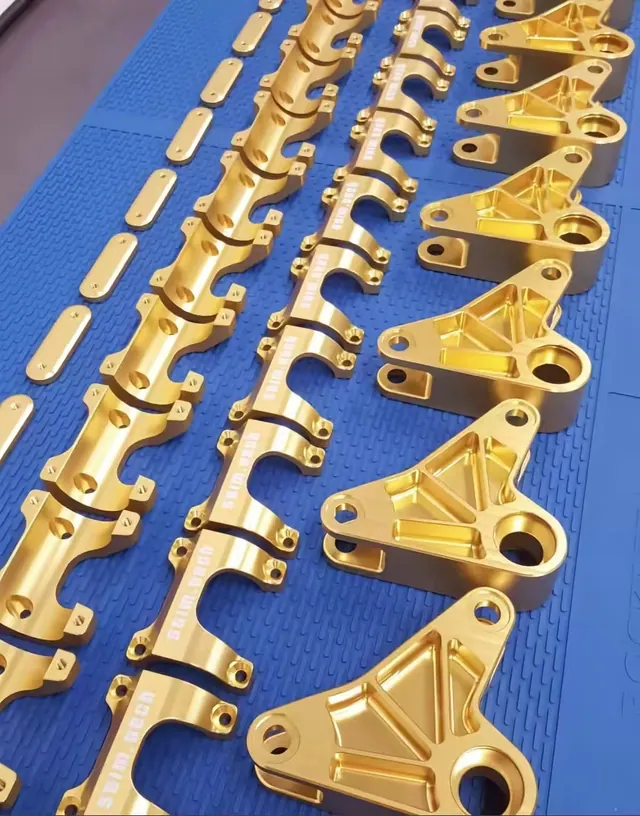
Anodizing converts the surface of an aluminium part into a hard oxide layer. It is not paint: the finish grows from the metal, which is why it keeps a metallic look and resists wear and corrosion far better than a coating of the same thickness.
Choosing the anodizing type
Type II (decorative) gives 5–25 µm with a broad colour range. It is the right choice for consumer product housings, panels, brackets and instrument cases where appearance matters.
Type III (hard anodizing) produces a much harder, thicker layer for parts that experience sliding wear, abrasion or frequent handling — linear guides, wear plates, machine components and tooling.
Preparing the surface
Machining marks show through anodizing, so the surface preparation is part of the specification. Bead blasting gives a uniform matte appearance and hides light tool marks; brushing produces a directional grain; polishing gives a bright, reflective finish. Decide which one you want before the parts are machined, because it also changes the pre-finish allowance.