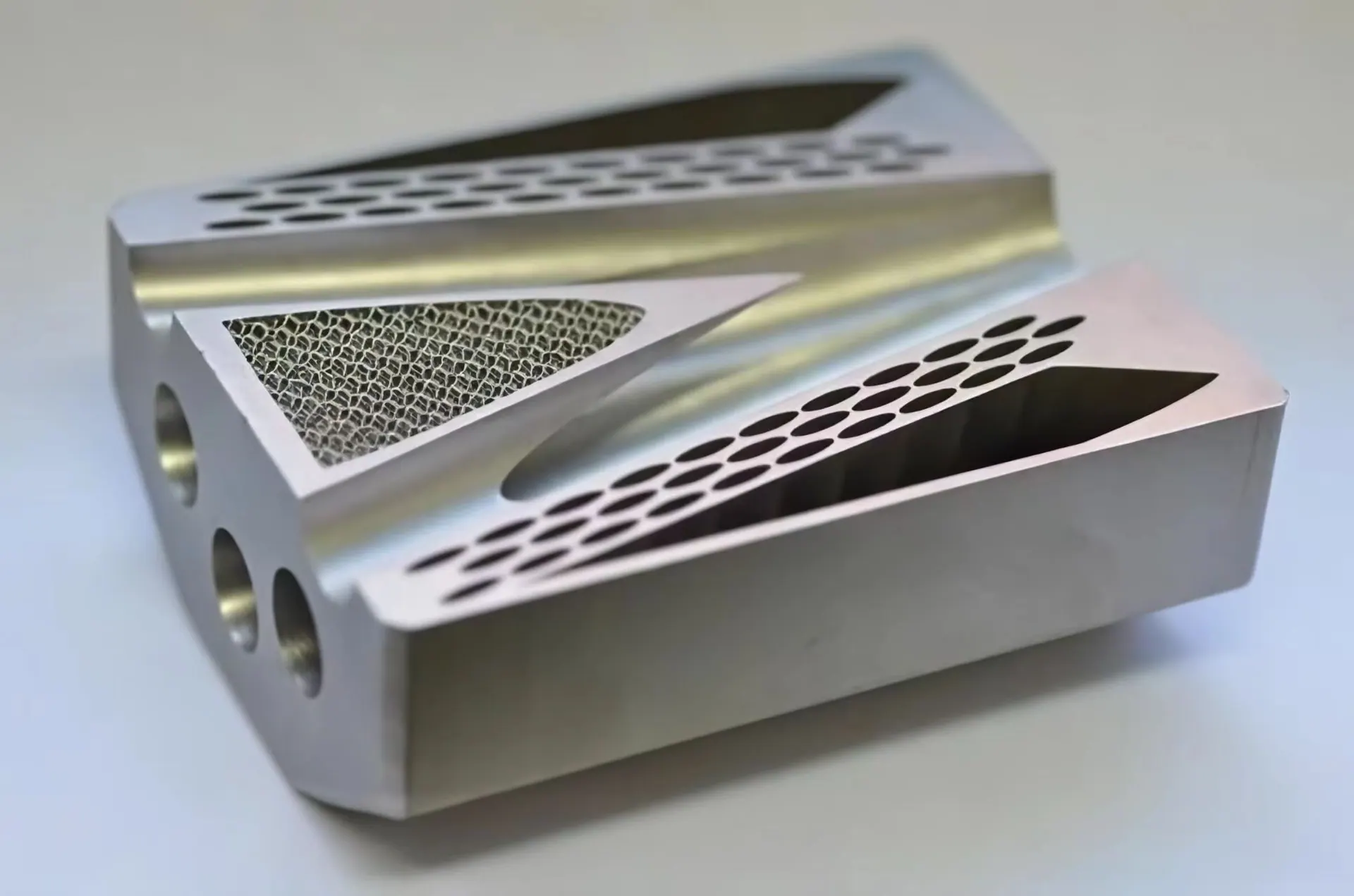
Aluminium is the material most custom parts end up being made from, and for good reasons: it machines quickly, it is light, it resists corrosion through its natural oxide layer, and it takes anodizing better than any other common metal.
Choosing a grade
6061-T6 — the general-purpose alloy. Good strength, excellent machinability, weldable, and it anodizes to a clean, even finish. Use it unless you have a reason not to.
6082-T6 — close to 6061 with slightly higher strength, commonly available in Europe.
7075-T6 — high strength, used for aerospace-style brackets, UAV components and highly loaded parts. It machines well but is not recommended for welding, and black anodizing tends to look bronze because of its copper content.
5083 — marine-grade corrosion resistance and good weldability, often used for fabricated structures rather than precision machined parts.
Machining and finishing notes
Aluminium’s softness makes it prone to burrs and marking, so edge finishing and packing matter as much as the machining itself. Thin walls are held with purpose-made fixtures rather than heavy clamping, which is what keeps a housing square and its faces parallel.
Almost every finish we offer applies: bead blasting for a uniform matte, brushing for a directional grain, anodizing for wear and colour, powder coating for thick colour coverage, and plating where conductivity is needed.