Skip to content
Brass & Copper

Brass & Copper

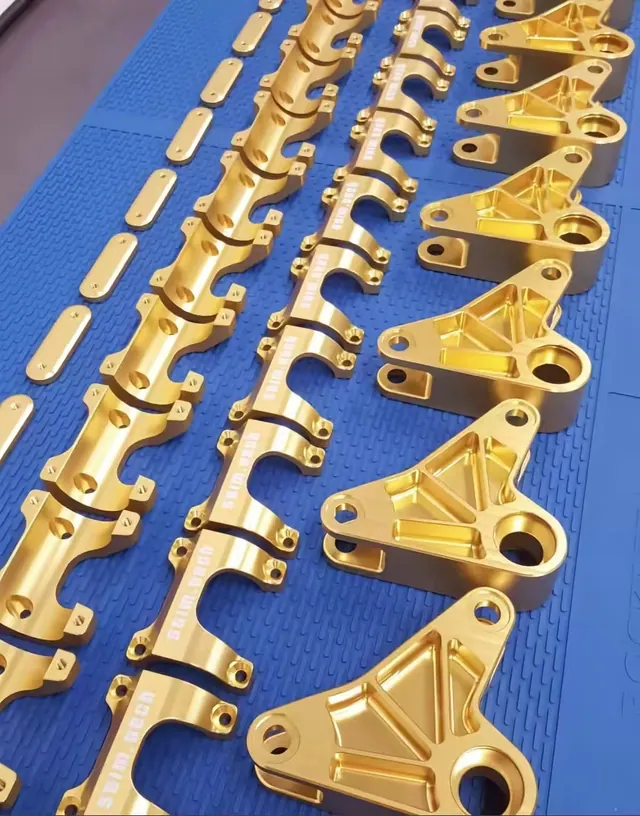
Excellent machinability, natural conductivity and a distinctive appearance for fittings, contacts and precision components.

Brass and copper are specified when conductivity, thermal performance or a specific appearance is part of the function — not just when a part needs to be strong.

Where they are used

Fluid and pneumatic fittings, manifolds and valve bodies, electrical contacts, terminals and busbars, heat-exchanger components, instrument parts, and decorative or architectural hardware.

Machining and appearance

Free-cutting brass produces fine chips and excellent finish, which keeps cycle times low and makes it a favourite for turned parts. Copper is softer and tends to gall, so tooling and speeds are adjusted, and parts are handled carefully to avoid marking.

Both materials polish well and plate readily with nickel, chrome or tin. Where the part will be seen, we polish and lacquer or plate to keep the appearance stable over time.

FAQ

Brass & Copper — frequently asked questions

Why is brass often chosen for turned parts?

Free-cutting brass machines faster than almost any other metal, produces short chips and gives excellent surface finish, which makes it ideal for high-volume turned components such as fittings, connectors and spacers.

Will brass tarnish?

Yes — it develops a patina over time. A clear lacquer or a plated finish keeps the bright appearance. For functional parts the patina is usually harmless, though brass can dezincify in prolonged contact with certain waters.

Can you machine beryllium copper?

Yes, with controlled handling procedures for the beryllium content. It is used where a spring material with high conductivity is needed, such as instrument contacts.

Start a project

Request a quotation for brass & copper parts

Send your drawing with the material grade, quantity and finish. We will confirm availability, lead time and price in writing.