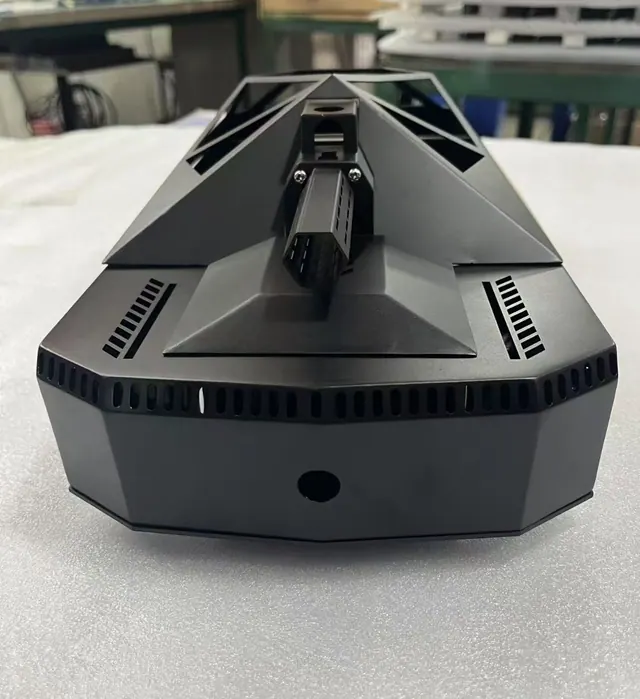
Consumer Electronics manufacturing
Cosmetic housings, bezels, heat sinks and internal hardware with the appearance quality that product teams are judged on.
In consumer electronics the part is the product experience. A housing with an uneven bead blast, a colour that differs from the last batch, or a cover that sits proud on one side is a visible defect, regardless of whether it meets the drawing.
What we make
Enclosure bodies and covers, bezels and trim, heat sinks, internal brackets and shields, button and knob hardware, and appearance models for design reviews.
Cosmetics are specified, not assumed
We ask which faces are visible and at what viewing distance, then agree the surface preparation, colour reference and packing method before production. Any appearance acceptance criterion that matters should be written down at the RFQ stage.
What this industry asks of a supplier
Cosmetic surface control
Visible faces are machined for a defined finish, and bead blasting, brushing or polishing is chosen to match the product language.
Colour consistency
Anodizing and painting are approved against a physical sample before the batch runs, so enclosures from different batches match.
Tight fit between parts
Mating parts — bezels, buttons, covers — are machined so they assemble with an even gap and no rework.
Fast design iteration
Machined prototypes change shape in days, so industrial design decisions can be made with the part in hand.
Processes we use for consumer electronics
Anodizing
Clear, black and coloured anodizing for aluminium parts — corrosion resistance and wear performance in a finish that still looks like metal.
View processCNC Milling
Precision CNC milling for housings, plates, brackets and complex profiles in metal and plastic, from a single prototype to repeat production batches.
View processPolishing & Deburring
Deburring, bead blasting, brushing and mirror polishing to set the final surface appearance of machined and fabricated parts.
View process5-Axis CNC Machining
Simultaneous five-axis machining for impellers, blades, sculpted surfaces and complex parts that cannot be reached or finished accurately in three axes.
View processPainting & Silk Screening
Liquid painting, primer systems, clear coats and silk-screened graphics for parts where appearance, colour accuracy or printed identification matters.
View processMaterials typically used
Parts for this industry
FAQ
Consumer Electronics — frequently asked questions
Can you match a Pantone or RAL colour on anodized aluminium?
Anodizing produces colour by dye uptake rather than a pigment layer, so exact matches to printed references are not always possible — especially on copper-bearing alloys. We will produce a first-article sample against your reference for approval.
How do you protect visible surfaces during machining?
Cosmetic faces are protected with film or machined in a sequence that keeps tooling away from them, and parts are packed interleaved so they do not rub in transit.
Start a project
Get a quotation for your consumer electronics parts
Send drawings with material, finish and documentation requirements. Our engineers will confirm process, lead time and price in writing.